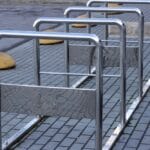


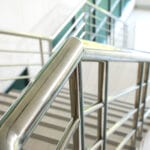

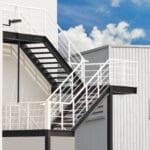


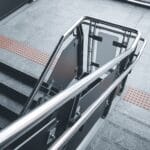



Corrosion is one of the main enemies of outdoor metal structures. Whether it’s guardrails, staircases, handrails, or architectural elements, exposure to moisture, salt, temperature fluctuations, and atmospheric pollutants can weaken metals, reduce their durability, and compromise installation safety.
Understanding the mechanisms of corrosion and implementing effective preventive methods is therefore essential to preserve the performance and aesthetics of metal structures.
In this article, we present the main types of corrosion, the most common protection techniques, effective surface treatments, and best maintenance practices to extend the service life of outdoor steel.
Key Summary
| Topic | Key points | Impact on durability |
| Understanding corrosion | Chemical or electrochemical reaction of metal with the environment | Identifies causes of deterioration |
| Types of corrosion | General, localized, galvanic | Different prevention approaches |
| Protective coatings | Paints, galvanizing, passivation | Physical barrier against moisture |
| Surface treatment | Sandblasting, shot blasting, thermal spraying | Improves adhesion and protection |
| Electrochemical protection | Anodic, cathodic | Neutralizes corrosive activity |
| Alternative materials | Stainless steel, aluminum, composites | Reduced corrosion risk |
| Regular maintenance | Cleaning, inspection, quick repairs | Extends metal service life |
| Professional expertise | Appropriate design and finishing | Long-term safety and performance |
Understanding Steel Corrosion
What Is Corrosion?
Corrosion is a natural phenomenon resulting from a chemical or electrochemical reaction between a metal and its environment. In the case of steel, this reaction generally appears as oxidation, creating a layer of rust that gradually weakens the surface.
Moisture, salinity, and atmospheric pollution accelerate this process, especially on unprotected outdoor structures.
Common Types of Corrosion
- General corrosion: uniform attack across the entire metal surface. Predictable and manageable with coatings.
- Localized corrosion: formation of pits or crevices, often linked to standing water or contaminants.
- Galvanic corrosion: caused by contact between two different metals in a conductive medium (e.g., steel and aluminum).
Each form of corrosion requires a specific strategy that combines suitable design, surface protection, and regular maintenance.
Effects on Outdoor Structures
Corrosion affects not only appearance, but also the mechanical strength of steel. Rusted areas become more porous, reducing load capacity and increasing the risk of cracking. Over time, untreated corrosion can lead to structural failures, making repairs costly and complex.
Corrosion Prevention Methods
Applying Protective Coatings
Anti-corrosion coatings act as a barrier between the metal and its environment by preventing moisture, oxygen, and chemical agents from directly reaching the metal surface. They can be organic (industrial paints, varnishes, resins applied in successive layers) or metallic (zinc, aluminum, protective alloys). The coating choice depends on many factors: exposure to salt water, thermal cycles, abrasion, mechanical stress, atmospheric pollution, food or chemical contact. In humid or marine environments, multi-coat systems remain the most effective because they provide built-in protective redundancy.
Improving the Performance of Anti-Corrosion Coatings
Zinc is particularly effective: when applied to steel (hot-dip galvanizing, thermal spraying, or zinc-rich paint), it not only creates a physical barrier but also acts as a sacrificial anode. This mechanism protects the steel even if the zinc layer is slightly damaged. This increased resistance significantly delays the appearance of rust, even in aggressive environments such as coastal areas or industrial installations exposed to salty sea spray.
Before a coating is applied, the surface must be perfectly stripped, cleaned, and degreased to ensure optimal adhesion. Abrasive blasting (Sa 2.5 standard) is often used to achieve a uniform profile that improves coating anchorage. An anti-corrosion epoxy primer, completed with a polyurethane or polysiloxane topcoat, provides high durability and prolonged weather resistance.
The Importance of Environmental Cleanliness
The presence of contaminants (dust, salt, oils, chemical residues) accelerates the electrochemical reactions responsible for corrosion. These particles can absorb moisture and create a conductive film on the metal, making it easier for corrosive cells to form. A clean surface therefore provides optimal conditions for preserving material longevity, even when anti-corrosion protections are already in place.
Why Regular Surface Maintenance Is Essential
In industrial, port, or coastal settings, salty or pollutant deposits settle on metal surfaces daily. Regular cleaning prevents these particles from penetrating the protective layer or triggering underlying corrosion. A simple periodic rinse with fresh water is often enough to significantly reduce the corrosion rate, especially for structures exposed to sea winds. In factories or warehouses, vacuuming or wiping metal surfaces limits chemical contamination and extends the service life of coatings.
Controlled Oxidation and Passivation
Some metals, such as stainless steel, are naturally protected by the formation of a chromium oxide film. This passivation phenomenon creates a stable, thin, invisible layer that regenerates automatically when damaged. This property is what gives stainless steels their excellent resistance, even in humid or mildly corrosive environments.
Controlled Passivation to Restore or Improve Protection
This treatment can also be carried out artificially after welding, cutting, or polishing to restore the metal’s natural resistance. Chemical solutions based on nitric or citric acid remove surface contaminants and rebuild the passive layer. In the food, pharmaceutical, or marine industries, this step is essential to ensure hygiene, durability, and resistance to aggressive agents.
Electrochemical Protection
Anodic or cathodic protection systems use an electrical current to neutralize the metal’s corrosive activity. In the cathodic method, a more reactive metal (zinc, magnesium, aluminum) is attached to the structure to attract corrosion in its place. This process turns the steel into a cathode, making it virtually insensitive to chemical attack.
Industrial Applications of Electrochemical Protection
This process is used in marine environments, buried pipelines, storage tanks, bridges, and ship hulls. When a coating alone is not enough or when there is a risk of microcracks, cathodic protection becomes an essential complement. Systems can be galvanic (without external power) or impressed-current (with a controlled power supply), providing a durable level of protection that can be adjusted depending on site conditions.
Alternatives and Material Selection
When to Consider Alternative Materials
In some situations, replacing steel with a material that is naturally corrosion-resistant can be more cost-effective over the long term. Engineering plastics, fiber-reinforced composites, or certain fiber-reinforced concretes offer excellent resistance in humid or chemical environments. They also have the advantage of being lighter and sometimes easier to install.
Limits of Alternative Materials
However, these alternatives are not suitable for structures requiring high mechanical rigidity, fire resistance, or significant dimensional stability. In high structural-load installations, composite materials can deform or lose their properties. In addition, their upfront cost can be higher, and their resistance to UV exposure and impacts is not always equivalent to that of metals.
Advantages of Corrosion-Resistant Alloys
Stainless steel (grades 304, 316, duplex) remains the reference for corrosion resistance. Grade 316, enriched with molybdenum, performs particularly well in salty and chlorinated environments. Duplex alloys, in turn, offer an excellent balance between mechanical strength and chemical durability.
Comparison Between Stainless Steel and Aluminum
Aluminum is a lightweight alternative naturally protected by an oxide layer. It resists atmospheric corrosion very well, but it is more sensitive to high mechanical loads and strongly alkaline environments. The choice between stainless steel and aluminum therefore depends on the application: stainless steel for severe environments, aluminum for lightweight or architectural structures.
Surface Preparation and Treatment Techniques
Why Is Surface Preparation Crucial?
Careful preparation is the foundation of effective protection. It removes impurities, grease, oxides, mill scale, and residual particles that would prevent the coating from adhering. This preparation can include mechanical brushing, abrasive blasting, chemical stripping, or high-pressure washing depending on the requirements.
Impact of Preparation on Treatment Durability
A poorly prepared surface drastically reduces the performance of anti-corrosion coatings. Premature peeling, blistering, cracking, or infiltration often occur when preparation has been neglected. Conversely, a controlled surface profile improves coating anchorage, increases abrasion resistance, and extends service life. Preparation often represents 50% to 70% of the success of the final treatment.
Common Methods
- Sandblasting: blasting abrasives to clean and standardize the surface.
- Shot blasting: mechanical treatment that creates a rough texture to improve coating adhesion.
- Polishing and degreasing: used for stainless surfaces to achieve a uniform, hygienic finish.
Each technique is selected based on the metal type, the desired finish level, and the exposure environment.
Galvanizing and Thermal Spraying
Two processes are particularly used:
- Galvanizing: immersing steel in a bath of liquid zinc. Ideal for parts exposed to weather, it provides long-lasting protection.
- Thermal spraying: hot-spraying zinc or aluminum onto the steel surface using an electric arc spray gun. This method allows for more localized application and precise thickness control.
| Method | Principle | Advantages | Average durability |
| Galvanizing | Molten zinc bath | Full coverage, mechanical resistance | 25–40 years |
| Thermal spraying | Spraying molten metal | Suitable for large structures or repairs | 15–30 years |
The choice depends on context: galvanizing is preferred for new parts, while thermal spraying is suitable for renovations or localized repairs.
Industrial Anti-Corrosion Coatings
Industrial coating systems often combine several layers: primer, intermediate barrier, and topcoat. Their role is to block moisture, prevent oxygen penetration, and avoid electrochemical reactions.
Some formulations contain corrosion-inhibiting pigments or reinforced epoxy resins that provide extended protection, even in aggressive environments.
For outdoor structures exposed to severe conditions, it is recommended to choose multi-coat systems certified to ISO 12944 standards.
Cathodic Protection and High-Risk Environments
In marine, port, or industrial areas, cathodic protection is often essential. This process consists of applying a direct current that makes the metal surface inert to corrosion.
Used on foundations, bridges, or submerged structures, this method effectively complements traditional surface treatments and provides deeper protection.
Regular and Preventive Maintenance
Recommended Maintenance Practices
Regular preventive maintenance is the best way to extend outdoor steel’s service life:
- Clean surfaces with lukewarm water and a neutral detergent.
- Inspect fasteners, welds, and joints at least twice a year.
- Quickly repair scratches or areas where the coating is damaged.
- Avoid abrasive or chlorine-based cleaners.
These simple steps prevent rust from spreading and maintain the metal’s appearance.
Signs of Corrosion to Watch For
- Brown stains or a powdery film appearing.
- Small pits on the surface or blisters under paint.
- Dull, cracked, or bubbled welds.
- Localized deterioration around fasteners.
Acting quickly at the first signs limits spread and avoids major repairs.
The Importance of Professional Expertise
Even the best treatments can lose effectiveness if the part’s design or the installation is not suitable. That’s why it’s essential to entrust fabrication, treatment, and installation to professionals specializing in metalwork.
At Métanox, corrosion prevention is built into every step: material selection, controlled welding, passivation, and finishes adapted to the exposure environment. The company focuses on alloy quality and assembly precision to deliver durable structures that meet the highest industry requirements.
Conclusion
Preventing outdoor steel corrosion requires a comprehensive approach: understanding degradation mechanisms, choosing the right material, applying appropriate treatments, and ensuring regular maintenance.
With a combination of protective coatings, adapted surface treatments, and rigorous preventive maintenance, it is possible to significantly extend the service life of metal structures.
For any project requiring the design, treatment, or renovation of stainless-steel structures, the Métanox team supports you with durable, safe solutions tailored to each environment.