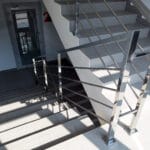


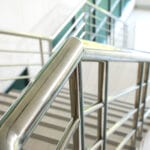

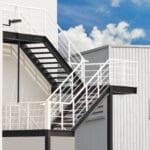


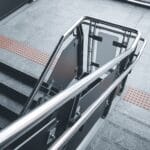
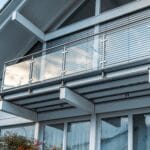

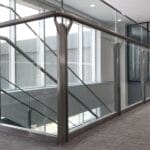

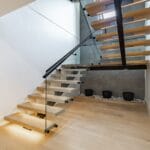
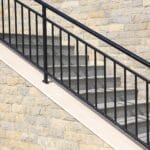
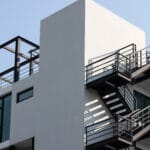
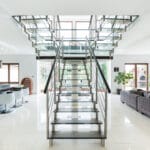

In any architectural project, a guardrail represents far more than a simple safety element. It contributes to a building’s aesthetic cohesion, ensures user protection, and reflects the level of finish in the work. Among the various materials available, stainless steel stands out as an essential benchmark for its strength, durability, and timeless elegance.
Its fabrication is based on a series of demanding technical steps, where precision and metallurgical expertise ensure the quality of the finished product. This article clearly and thoroughly describes the design, welding, treatment, and quality control steps that make up the manufacturing process for a stainless-steel guardrail.
In modern construction, understanding this process is essential to evaluating the reliability of a structure and ensuring occupant safety. Manufacturers who master these steps contribute directly to a building’s durability and value.
Key Summary
| Topic | Key points | Impact |
| Material selection | 304 or 316 stainless depending on the environment | Durability and corrosion resistance |
| Custom design | Accurate measurements, validated technical drawings | Safety and compliance |
| Professional welding | TIG or MIG techniques | Structural strength |
| Surface treatment | Passivation, polishing, sandblasting | Protection and aesthetics |
| Quality control | Dimensional and visual checks | Reliability of the finished product |
| Installation | Secure installation and precise adjustments | Longevity and stability |
| Regular maintenance | Gentle cleaning, annual inspection | Preservation of appearance |
| Custom fabrication | Adaptation to each architectural project | A unique, harmonious result |
Why Choose Stainless Steel for a Guardrail
Stainless steel is preferred for guardrails thanks to its unique combination of robustness and aesthetics. Its composition, enriched with chromium and nickel, forms a thin protective layer that makes it naturally resistant to corrosion, even in humid or salty environments.
This material is suitable for residential buildings as well as public or commercial spaces, where safety and durability are non-negotiable criteria. It withstands temperature variations, water splashes, and exposure to sea salt without deforming, making it a smart choice for coastal areas or outdoor terraces.
Main Advantages
- Corrosion resistance: suitable for coastal areas, balconies, and outdoor terraces.
- Minimal maintenance: a simple wash with soapy water is enough to preserve its shine.
- Versatile aesthetics: brushed or mirror-polished finishes to suit various architectural styles.
- Long service life: often more than 25 years, and even longer with proper maintenance.
- Recyclability: a 100% recyclable material that supports more sustainable, responsible construction.
Comparison With Other Materials
| Material | Corrosion resistance | Maintenance required | Average lifespan |
| 304/316 stainless steel | Excellent | Low | 25–40 years |
| Aluminum | Good | Frequent cleaning | 15–25 years |
| Galvanized steel | Moderate | Periodic touch-ups | 20–30 years |
Stainless steel remains the best compromise between longevity, strength, and visual quality. It combines technical performance and architectural elegance while offering long-term added value.
Key Steps in the Manufacturing Process
Design and Planning
The manufacturing of a stainless-steel guardrail begins with a precise design phase, essential to the project’s success. Engineers and designers take exact measurements and create detailed 3D plans that will serve as a reference throughout the entire process.
Each project is designed to meet safety requirements, allowable load criteria, and compliance with building standards. Designers must also anticipate on-site constraints: stair slope, anchoring points, rainwater flow, or wind exposure. These details directly influence the guardrail’s stability and durability.
Selecting the steel grade (304 for indoor use, 316 for outdoor or marine use) is decisive at this stage. The design must also consider user ergonomics: handrail height, baluster spacing, and impact resistance. A well-thought-out design combines safety, aesthetics, and functionality.
Cutting, Assembly, and Welding
Once the design is approved, bars, tubes, and base plates are cut using a laser or a band saw according to the specified dimensions. Precision cutting reduces rework and optimizes the strength of the assemblies.
The parts are then prepared for assembly. Edges are deburred, adjusted, and positioned using jigs that ensure perfect alignment before welding. This meticulous preparation work guarantees the final product’s quality.
Welding Techniques
TIG (Tungsten Inert Gas) welding is the most commonly used method for stainless steel. It produces fine, clean, strong weld beads that are ideal for visible applications. MIG (Metal Inert Gas) welding, which is faster, is preferred for heavier or repetitive structures.
Temperature control is crucial: excessive heat can damage the protective passive layer and reduce corrosion resistance.
Welding Best Practices
- Use dedicated stainless electrodes and filler wires.
- Thoroughly clean surfaces before welding.
- Maintain an inert-gas purge inside tubes to prevent internal oxidation.
- Allow natural cooling without thermal shock.
- Perform a visual inspection after each joint to detect any deformation.
The expertise of qualified welders ensures the visual and mechanical quality of every connection. Their control of welding parameters (current, speed, angle, and shielding gas) is essential to achieving a flawless finish.
Surface Treatment
Once welding is complete, the guardrail undergoes surface treatment to strengthen corrosion protection and standardize its appearance. This step, often overlooked in low-cost fabrication, is nevertheless crucial to ensuring the structure’s long-term durability.
Main Steps
- Pickling: removes oxides and impurities from welding.
- Passivation: restores the protective chromium layer essential to corrosion resistance.
- Polishing or brushing: delivers the desired finish depending on the intended use (indoor or outdoor).
| Finish | Appearance | Typical application |
| Mirror polish | Shiny and smooth | Indoor, modern design |
| Satin brushed | Uniform matte | Outdoor, high-traffic areas |
| Fine sandblasted | Soft, slip-resistant texture | Stairs, outdoor handrails |
These treatments improve both aesthetics and safety by removing sharp edges and improving grip. Well-executed polishing also reduces dirt buildup and makes routine maintenance easier.
Quality Control and Safety Standards
Before a guardrail reaches a job site or a customer, it goes through a complete quality control process. This process is essential to ensure not only occupant safety, but also the product’s long-term durability. Since stainless-steel guardrails are often installed in sensitive areas—balconies, terraces, mezzanines, staircases—any failure could lead to serious consequences. That’s why reputable manufacturers apply strict protocols inspired by industry best practices.
In the workshop, each component is handled with precision and inspected at multiple stages of production. The objective is to ensure perfect compliance with the plans, guarantee the system’s mechanical strength, and verify the integrity of the welds, which are very important in a stainless-steel guardrail.
Checks Performed
Main inspections include:
-
Dimensional measurements to confirm compliance with the plans, including height, post thickness, and spacing between components.
-
Visual inspection of welds and finishes to identify any defect, inclusion, porosity, or irregularity that could weaken the structure.
-
Mechanical tests for resistance to horizontal and vertical loads, in accordance with building standards, to ensure the guardrail can withstand typical forces (leaning, wind, crowd movement).
-
Inspection of anchoring points and overall system stability, since anchoring is often the critical point of an installation.
-
Finish validation: uniform polishing, no stains, scratches, or visual defects that could harm aesthetics or promote corrosion.
A complete compliance report typically accompanies each guardrail, including lot numbers, materials used, and test results. This traceability builds confidence for the end customer and ensures full transparency in the manufacturing process.
Compliance With Standards
Guardrails must comply with the Québec Construction Code requirements as well as industry standards. These rules are not merely administrative: they are designed to offer maximum protection to users by preventing falls, slips, or structural failures.
Key requirements include:
-
Minimum height: 1.07 m for exterior balconies.
-
Load resistance: 0.75 kN/m for horizontal forces.
-
Baluster spacing: less than 100 mm, to prevent a child from passing through.
Beyond these obligations, responsible manufacturers design their guardrails to exceed minimum standards, especially in demanding environments such as coastal zones, public buildings, or high-traffic structures. A robust design from the outset reduces future interventions and improves the product’s longevity.
Stainless-Steel Guardrail Installation and Maintenance
A guardrail’s quality doesn’t depend only on materials or design: installation accounts for nearly 50% of final performance. A perfectly designed guardrail that is poorly installed can become unstable, noisy, or even dangerous. That’s why intervention by a specialized team is essential.
Installation Steps
Installation is carried out on site by qualified technicians who are familiar with different structure types (concrete, wood, steel).
It includes:
-
Anchoring base plates based on the substrate, while verifying depth, strength, and anchor compatibility.
-
Precise adjustment of sections to ensure perfect alignment, which is essential for overall aesthetics and stability.
-
Final setting and verification of the strength of all fasteners, including a light load test to confirm the system behaves properly.
Installers also check the watertightness of fastening points and ensure galvanic couples are avoided—a phenomenon that can accelerate corrosion when an incompatible metal is in direct contact with stainless steel. A properly executed installation ensures a quiet, durable, and safe structure for years.
Recommended Maintenance
Stainless steel is known for its corrosion resistance, but minimal maintenance is still necessary to preserve its appearance and mechanical properties.
A few simple actions help extend its service life:
-
Semi-annual cleaning with lukewarm water and mild soap to remove dust, pollution, greasy deposits, or urban residues.
-
Annual inspection of fasteners, welds, and bearing areas.
-
Avoid abrasive cleaners or products containing chlorine, as these can damage the stainless steel’s passive layer.
-
Regular wiping to remove salt deposits, especially important near the sea or in industrial environments.
A well-maintained stainless-steel guardrail keeps its natural shine, avoids staining, and withstands external aggressions more effectively.
Signs of Deterioration to Watch For
Even though stainless steel is extremely resistant, signs of wear can appear over the years, particularly in aggressive environments (seaside, swimming pool areas, chemical industry).
Main indicators include:
-
Brownish marks: the beginning of surface corrosion, often caused by external contaminants.
-
Dull or cracked welds: a sign of mechanical fatigue or insufficient maintenance.
-
Slight deformation under stress, for example after an impact or excessive leaning.
-
Loose fasteners due to vibrations, impacts, or thermal expansion.
Addressing these minor signs quickly helps avoid costly repairs and, most importantly, helps maintain the guardrail’s structural integrity, which is essential for occupant safety.
Custom Metal Fabrication: Added Value
Custom fabrication makes it possible to adapt each guardrail to the project’s specific constraints: irregular shapes, helical staircases, glass mezzanines, or panoramic terraces. This personalized approach distinguishes high-end work and ensures perfect integration with the existing architecture.
Advantages of a Custom Design
- Perfect integration with the building’s architecture.
- Freedom to choose materials, finishes, and assemblies.
- Enhanced safety thanks to precise dimensional adaptation.
- Design harmony with other metal elements (stairs, handrails, balustrades).
- Ability to integrate glass, wood, or lighting elements for a unique visual signature.
At Métanox, each guardrail is designed and manufactured with close attention to detail, combining structural performance with refined visuals. The team supports clients at every step (from design to final installation), ensuring each component meets the highest quality standards and Canadian-market safety requirements.
Conclusion
The manufacturing process for a stainless-steel guardrail combines technical precision, rigorous compliance, and skilled craftsmanship. From the initial design to final installation, each step plays an essential role in ensuring the safety, durability, and aesthetic value of the finished product.
Stainless steel remains a strategic choice for projects that require strength, elegance, and minimal maintenance. Thanks to a combination of careful design, expert welding, and appropriate surface treatment, a stainless-steel guardrail can retain its appearance and performance for several decades.