Powder coating has become one of the most widely used finishing processes in modern metalworking, particularly for steel structures and components. This surface treatment, both protective and aesthetic, combines high resistance, uniform coverage, and environmental responsibility. Thanks to electrostatic technology, it provides an even coat with no runs or streaks, along with long-lasting protection against corrosion and external wear.
More and more companies and specialized custom metal fabrication shops, such as Métanox, favor this process for the quality of the final finish and the longevity it provides to fabricated work. In this article, we will take a detailed look at how powder coating works, its advantages for steel, its applications in industrial and architectural sectors, and why it stands out as a durable and cost-effective solution.
Key Summary
| Topic | Key points | Impact on durability |
| Process principle | Electrostatic application and oven curing | Uniform, durable coating |
| Compatible materials | Steel, aluminum, stainless steel, copper | Versatility and thermal compatibility |
| Anti-corrosion protection | Effective barrier against moisture and UV | Extended component lifespan |
| Mechanical resistance | Excellent wear and scratch resistance | Less maintenance and replacement |
| Environmental durability | Solvent-free, recyclable | Reduced environmental impact |
| Applications | Architecture, industry, furniture | High-end, functional finish |
| Customization | Wide range of colors and textures | Design and aesthetic flexibility |
| Métanox expertise | Proven, durable processes | Professional, custom-grade finishing |
Understanding the Principle of Powder Coating
Powder coating is a surface-coating process used to protect metal parts and give them a refined appearance. It involves applying a polymer powder (often epoxy- or polyester-based) to a conductive surface, then heating it so it melts and cures. This fusion creates an even, smooth, durable layer that adheres tightly to the metal.
Electrostatic Application
The powder is sprayed using an electrostatic gun that electrically charges the particles. They are attracted to the metal part, which is grounded, ensuring optimal adhesion and an even distribution of the coating. This step ensures full coverage, even on hard-to-reach areas.
Baking and Curing
Once the powder has been applied, the parts are placed in a curing oven at a temperature between 160 and 210 °C. Under heat, the powder melts and crosslinks to form a solid, protective film. Once cured, this coating offers strong mechanical and chemical resistance while maintaining a clean, flawless appearance.
This process releases no solvents or volatile organic compounds, making it a clean and environmentally responsible option, with little to no material loss.
Materials Compatible With Powder Coating
Powder coating can be applied to most metals that can withstand the heat of the curing oven. The most common include:
- Steel, especially well-suited due to its strength and conductivity.
- Aluminum, valued for its lightness and excellent compatibility with polyester powders.
- Stainless steel and copper, when a colored or specific finish is desired.
These materials must tolerate temperatures between 160 and 200 °C, a key condition for proper adhesion and coating quality. Before application, degreasing or light sandblasting is often performed to remove impurities and ensure optimal bonding.
The Advantages of Powder Coating for Steel
Protection Against Corrosion and Weather
One of powder coating’s key strengths is its long-lasting protection against corrosion. The coating acts as a physical barrier that prevents moisture, air, and chemical agents from reaching the metal surface. This enhanced resistance makes it an ideal solution for outdoor structures exposed to rain, snow, road salts, or UV rays.
For steel, powder coating effectively complements baseline anti-corrosion treatments such as galvanizing or abrasive blasting, providing added protection and superior service life.
Mechanical Resistance and Reduced Wear
The cured film offers high resistance to abrasion and scratching, far superior to conventional liquid paints. It protects surfaces from impacts, friction, and everyday mechanical stress. This durability makes it a preferred choice for guardrails, building structures, street furniture, and industrial equipment exposed to heavy use.
Coating Durability
A properly applied powder-coated finish can maintain its appearance and performance for more than 15 years, even in demanding environments. This longevity reduces maintenance requirements and lowers costs over time.
| Property | Traditional liquid paint | Powder coating |
| Average service life | 5 to 7 years | 15+ years |
| Scratch resistance | Moderate | High |
| Film uniformity | Variable | Perfect |
| Environmental impact | Contains solvents | Zero solvent |
| Maintenance required | Frequent | Low |
Durability and Environmental Benefits
Powder coating fits squarely within an eco-responsible approach. Unlike liquid paints, it emits no volatile solvents (VOCs) and produces virtually no waste. Unused powder can be recovered, filtered, and reused, which significantly improves material efficiency.
This full recyclability supports a circular-economy mindset, helping reduce carbon footprint and preserve natural resources. In addition, the coating’s high durability lowers the frequency of replacements and repairs, limiting raw-material consumption over the long term.
Industrial and Architectural Applications
In Industry
Powder coating is widely used in automotive, rail, and industrial sectors where mechanical resistance and long-term durability are essential. It is used to protect frames, reinforcements, tools, and metal structures. Its resistance to heat and corrosion ensures strong performance even in demanding production conditions.
In Architecture and Construction
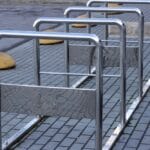
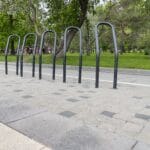
In architecture, powder coating is valued for its aesthetic qualities and long-term stability. It is often applied to guardrails, steel frameworks, metal structures, façades, and gates. The ability to choose from a wide range of colors and finishes allows architects to create visually cohesive ensembles while ensuring lasting protection.
In Furniture and Décor
The process is also common in both outdoor and indoor furniture. It delivers durable, attractive surfaces for chairs, light fixtures, frames, tables, and metal shelving. Powder coating provides an even finish with no marks and can suit any style: matte, gloss, textured, or metallic.
Customization and Bespoke Design
Powder coating is not limited to protection; it is also a powerful tool for aesthetic customization. Available powders come in a wide range of colors, effects, and textures. Finishes can be smooth, sand-textured, matte, glossy, or metallic, making it possible to meet the needs of any project, from the most understated to the most daring.
Powder paints can be selected based on the metal type and environmental constraints. For example:
- Epoxy powders are ideal for indoor parts and offer excellent chemical resistance.
- Polyester powders are well suited to outdoor use thanks to strong UV and weather resistance.
- Acrylic powders are used to achieve a very smooth, glossy finish often sought in architectural design.
Thanks to this range of options, powder coating makes it possible to combine function and aesthetics while adapting to clients’ visual preferences and the project’s technical constraints.
Process Economics and Cost-Effectiveness
Beyond its technical performance, powder coating stands out for its long-term cost-effectiveness. Its high durability reduces maintenance and replacement costs. The protected surface stays clean longer and requires little upkeep: a simple wash with lukewarm water and a soft cloth is enough to maintain its finish.
This ease of maintenance lowers operating costs and helps preserve the aesthetic appearance over time. For businesses and architects alike, it is a durable investment that combines performance and value.
Métanox Expertise in Powder Coating
At Métanox, powder coating is integrated into the overall custom metal fabrication process. Each part is prepared, sandblasted, and degreased prior to application, ensuring optimal coating adhesion. The company focuses on precision, consistency, and strict control of the curing cycle to achieve a flawless, durable finish that meets the most demanding standards.
With this rigorous approach, Métanox delivers consistent results across projects of all sizes: architectural structures, guardrails, gates, decorative components, and industrial elements. By combining technology, expertise, and attention to detail, the company provides clients with durable, attractive solutions adapted to each environment.
Conclusion
Powder coating on steel stands out as a highly effective, durable, and eco-friendly finishing solution. It protects effectively against corrosion, improves scratch resistance, and extends the service life of metal parts while providing a clean, customizable appearance. This industrial process combines technical excellence, environmental durability, and aesthetic quality; three values at the heart of contemporary metalwork.